
Museums in Phuket
Thalang National Museum
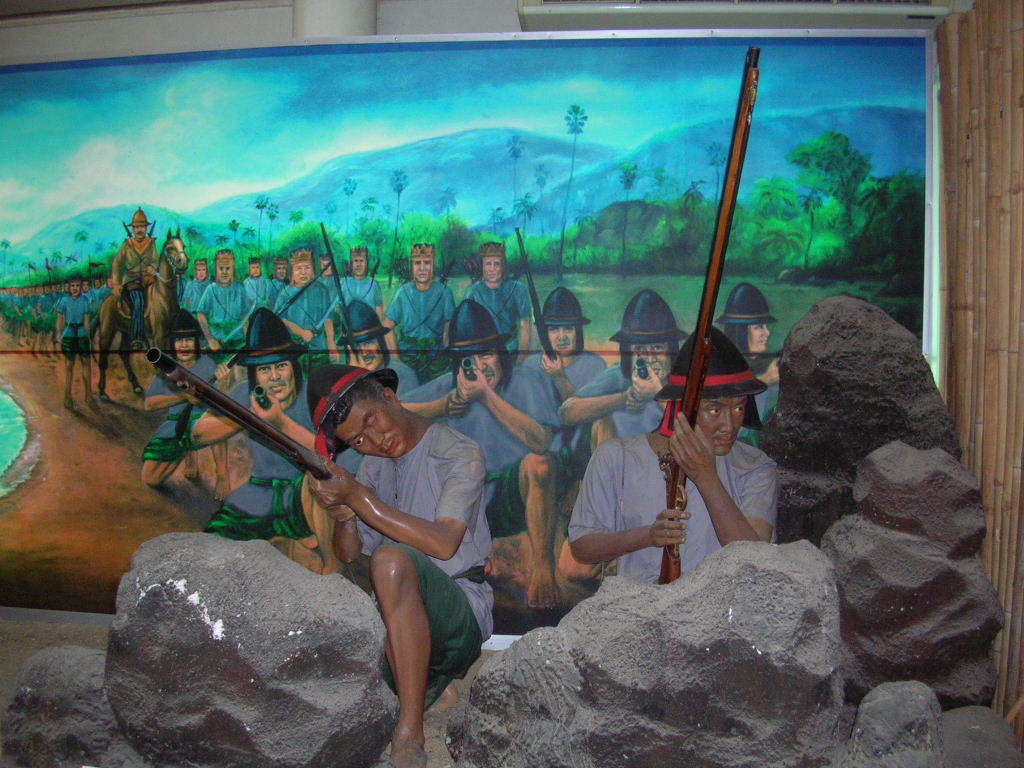 This
is a simple but pleasant museum covering the history of Phuket from prehistoric
times to today. You can learn about Phuket's geology, earliest inhabitants,
battles with Burma, the tin mining industry and rubber plantations. The museum
is another institution that practices two-tier
pricing but with an entrance fee of 30 baht for foreigners and 10 baht
for Thais, it is hardly worth worrying about.
This
is a simple but pleasant museum covering the history of Phuket from prehistoric
times to today. You can learn about Phuket's geology, earliest inhabitants,
battles with Burma, the tin mining industry and rubber plantations. The museum
is another institution that practices two-tier
pricing but with an entrance fee of 30 baht for foreigners and 10 baht
for Thais, it is hardly worth worrying about.
To get there, drive north up Thepkrasattri Road (Airport Road) and turn right at Heroines Monument Circle on to road 4027. The museum is almost immediately on your right.
Phuket Mining Museum
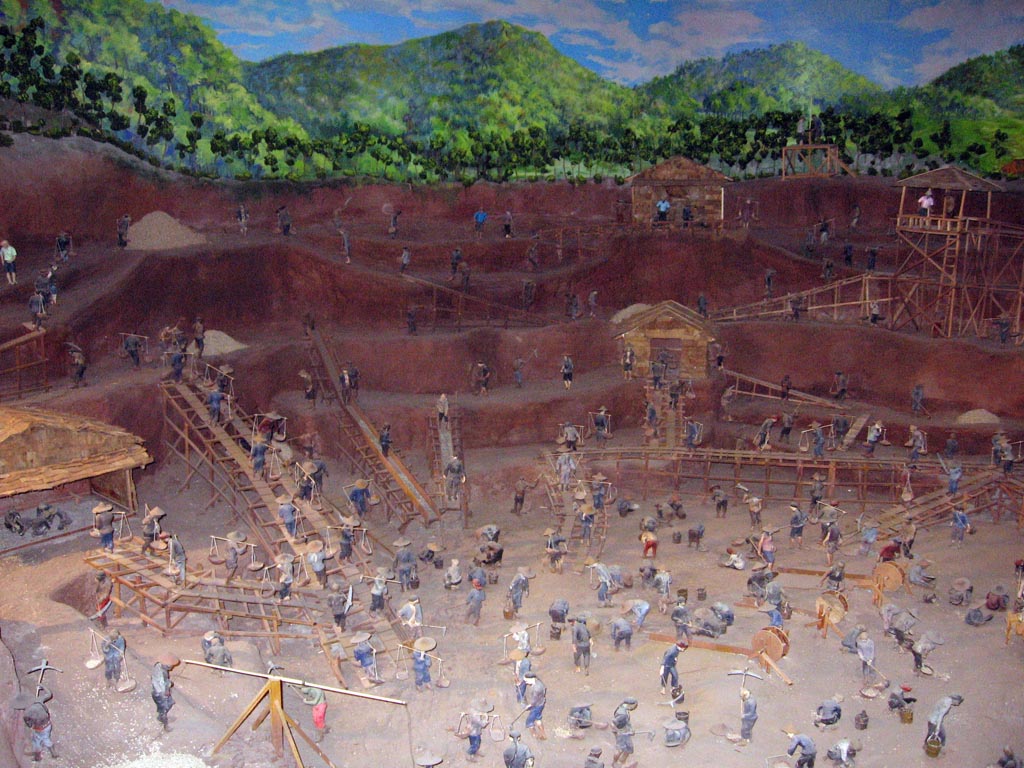 This new museum opened in late 2009.The
museum is dedicated to the tin mining industry that first brought prosperity
to Phuket. The last mines closed in the early nineties but the industry's
legacy remains in Phuket. The tin mining industry is an integral part of
Phuket's rich cultural history. The open cast mines that once littered the
island are now flooded and this explains the numerous lakes around the island.
The chinese immigrants who arrived to work the mines have integrated into
the local population and have become an important and influential part
of Phuket society..
This new museum opened in late 2009.The
museum is dedicated to the tin mining industry that first brought prosperity
to Phuket. The last mines closed in the early nineties but the industry's
legacy remains in Phuket. The tin mining industry is an integral part of
Phuket's rich cultural history. The open cast mines that once littered the
island are now flooded and this explains the numerous lakes around the island.
The chinese immigrants who arrived to work the mines have integrated into
the local population and have become an important and influential part
of Phuket society..
The main museum building is built in the Sino-Portuguese style of old Phuket Town. It is an impressive 7,000 square meters. Inside, there are displays of tin mining, geology and even a bit of evolutionary history. There is a nice section about old Phuket life with displays of old style shops, opium dens, shrines, and some fascinating old photos.
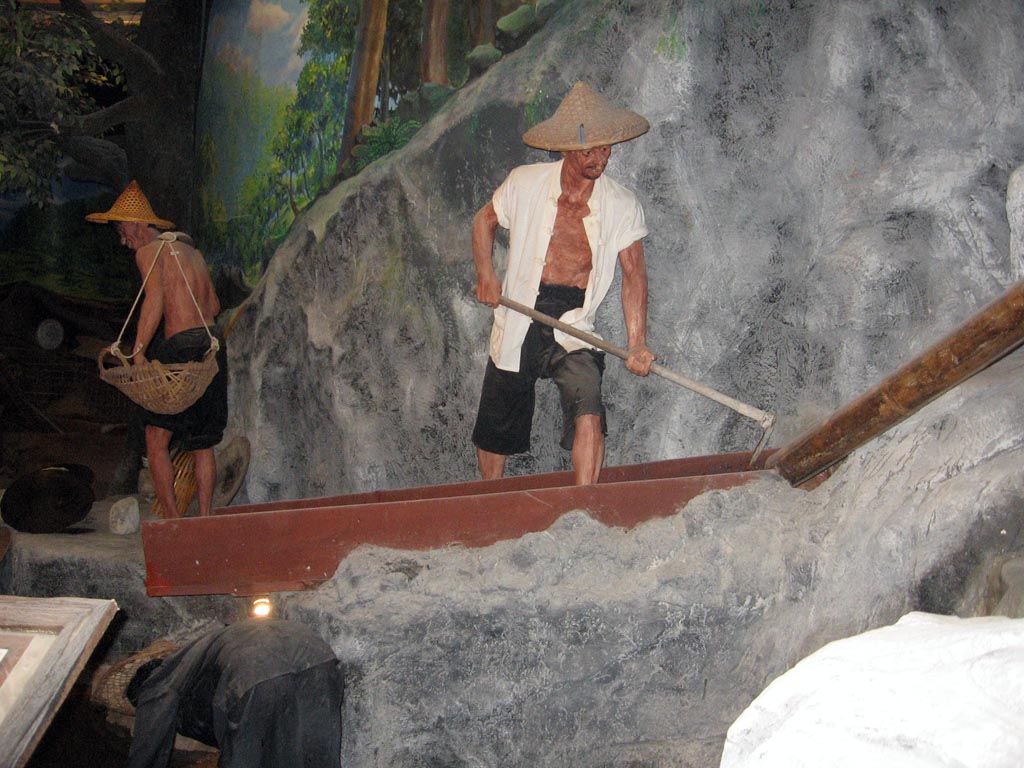 In
the grounds outside they have a few large pieces of old mining equipment
and they have built a full scale replica of a tin mine around
the lake at the front of the museum. It makes for a pleasant little walk
after you have finished looking around the museum. All in all, the museum
is a nice addition to Phuket's attractions.
In
the grounds outside they have a few large pieces of old mining equipment
and they have built a full scale replica of a tin mine around
the lake at the front of the museum. It makes for a pleasant little walk
after you have finished looking around the museum. All in all, the museum
is a nice addition to Phuket's attractions.
The museum is in Kathu on the back road that runs between Loch Palm Golf Course and the British International School. It is just 1 km from the school. The entrance fee is 100-baht.
Wat Phra Thong Museum
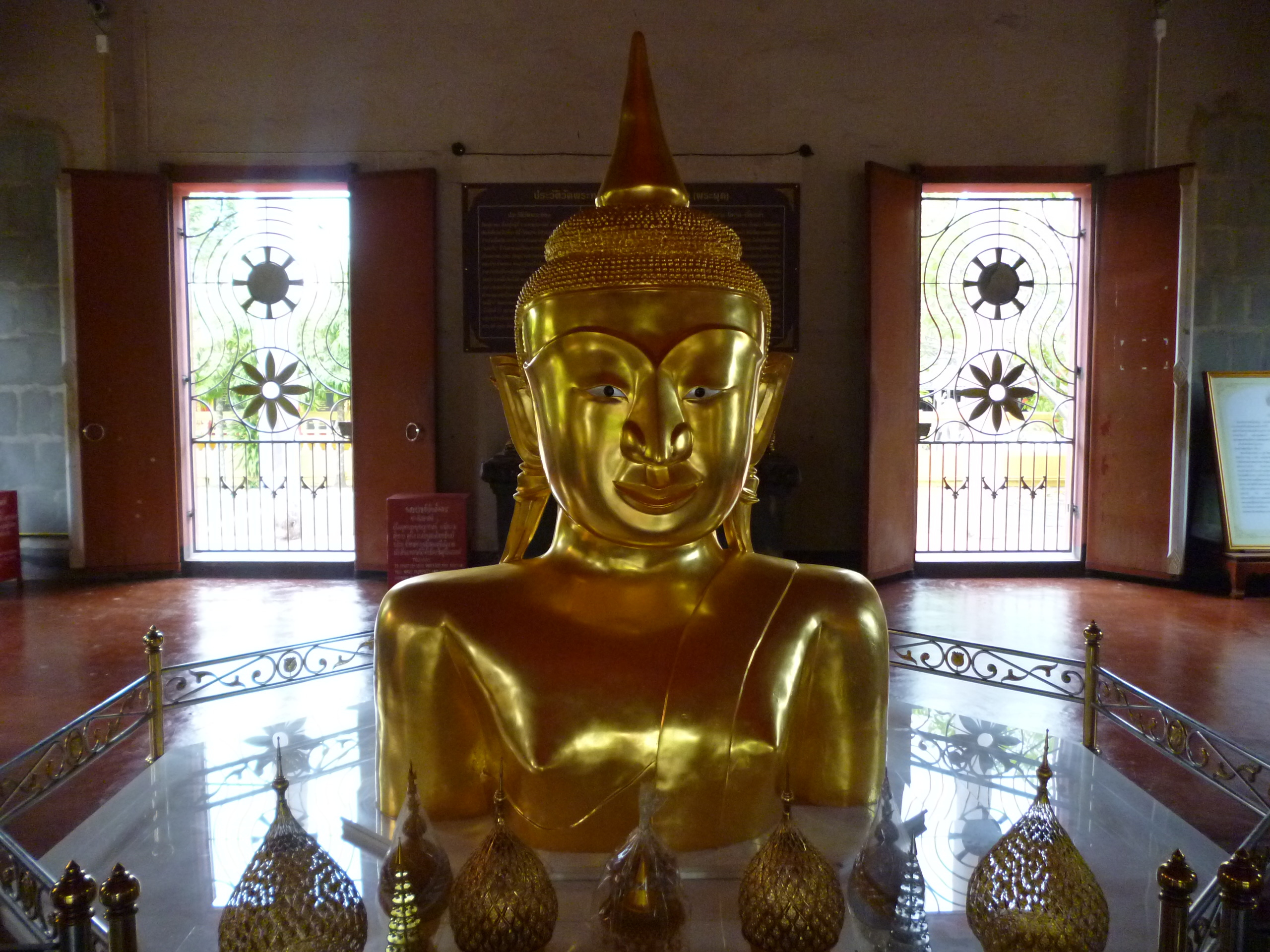 Wat
Phra Thong (Golden Buddha Temple) has a charming museum featuring artifacts
from old Phuket life. The temple itself is very pleasant and well worth a
visit. It features a golden Buddha image that appears to be buried in the
ground with only the chest and head emerging. There are some fascinating
stories about the history of this golden Buddha image. You can read all about
them on our temples
page.
Wat
Phra Thong (Golden Buddha Temple) has a charming museum featuring artifacts
from old Phuket life. The temple itself is very pleasant and well worth a
visit. It features a golden Buddha image that appears to be buried in the
ground with only the chest and head emerging. There are some fascinating
stories about the history of this golden Buddha image. You can read all about
them on our temples
page.
The temple's museum is in a nice building just across the road. The museum is a quirky collection of items from Phuket's past. Some are religious artifacts and others are just items from everyday life that give a delightful insight into how people lived in years gone by.
The religious artifacts include items such as offering trays, lucky charms and Buddha images.
There are many items from everyday Thai life such as water urns, rice-grinders, pots, crockery, lamps, etc. Some of these items are over 200-years old but remarkably you can still see many of these things in use in rural Thailand today.
Other exhibits include a large collection of old money, weapons, opium pots, clothes and many household items. It is a little disconcerting to see the museum also includes a collection of more recent items such as typewriters, record players and old TVs. So this means that items that were a normal part of my childhood are now museum pieces. Now I know I am getting old!
The museum is housed in a spacious upstairs hall. It is not a big museum but you could spend an hour inside if you really wanted to examine all the fascinating exhibits. Entrance is free but there is a donations box if you want to make a contribution.
Wat Phra Thong is in Thalang off Thepkrasattri Road, just north of the traffic lights. If you are heading north you need to throw a u-turn after the lights and then turn left.
Phuket Thai Hua Museum
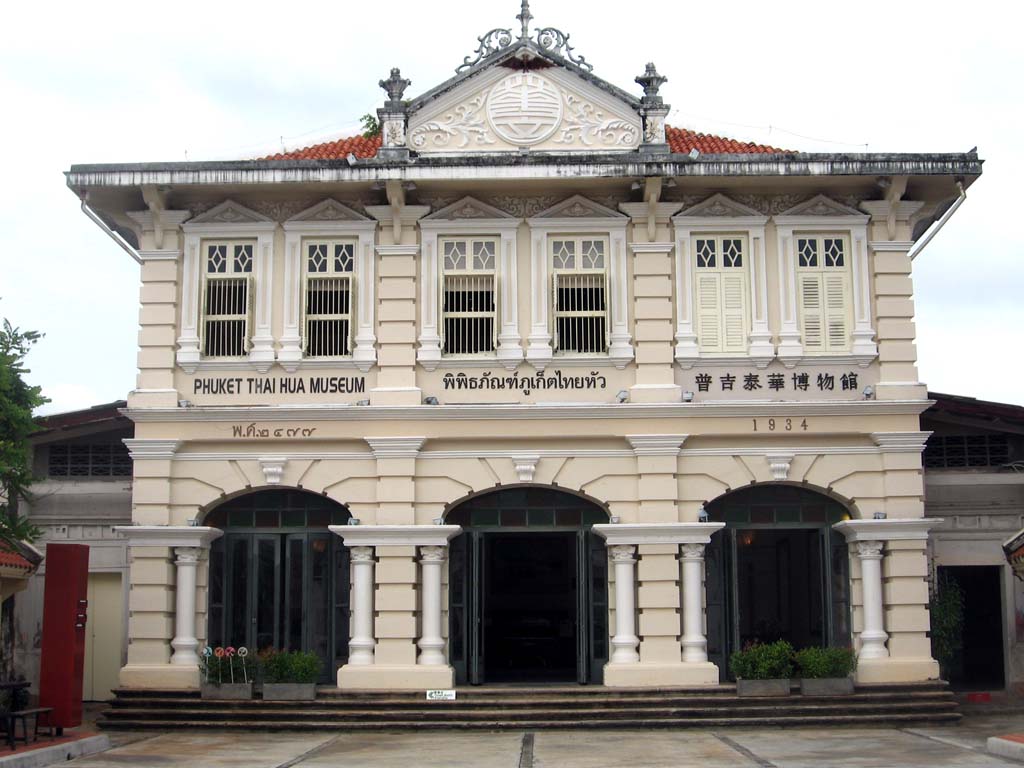 Thai Hua Museum in Phuket Town has exhibits about the history of Phuket
with particular emphasis on the infleunce of the Chinese
immigrant population. The building was originally a chinese school established
in 1934. Thai Hua School has now moved
to much bigger premises on the edge of town. It is a well-respected school
and they still teach Chinese. The old building has been converted into the
museum and it is a charming little place.
Thai Hua Museum in Phuket Town has exhibits about the history of Phuket
with particular emphasis on the infleunce of the Chinese
immigrant population. The building was originally a chinese school established
in 1934. Thai Hua School has now moved
to much bigger premises on the edge of town. It is a well-respected school
and they still teach Chinese. The old building has been converted into the
museum and it is a charming little place.
It is not a big museum but there are many nice exhibits about the early Chinese immigrants and their role in the development of Phuket. There are biographies of some of the more important people in Phuket's history and many nostalgic old photos. There are also nice displays about the vegetarian festival and Phuket Town's architecture. Some of the most charming displays are the old school photos.
Thai Hua museum is not the sort of attraction that you would go out of your way to see but if you are in Phuket Town and exploring the old town area then it is certainly worth popping in. It will take no more than an hour to go around.
Thai Hua musuem is on Krabi Road in Phuket Town. Like many of Phuket's public attractions, the museum practices two-tier pricing. At least they are up front about it with the prices clearly displayed. Entrance is 200-baht for foreigners and 50-baht for Thais and residents with work permits.
Chinpracha House
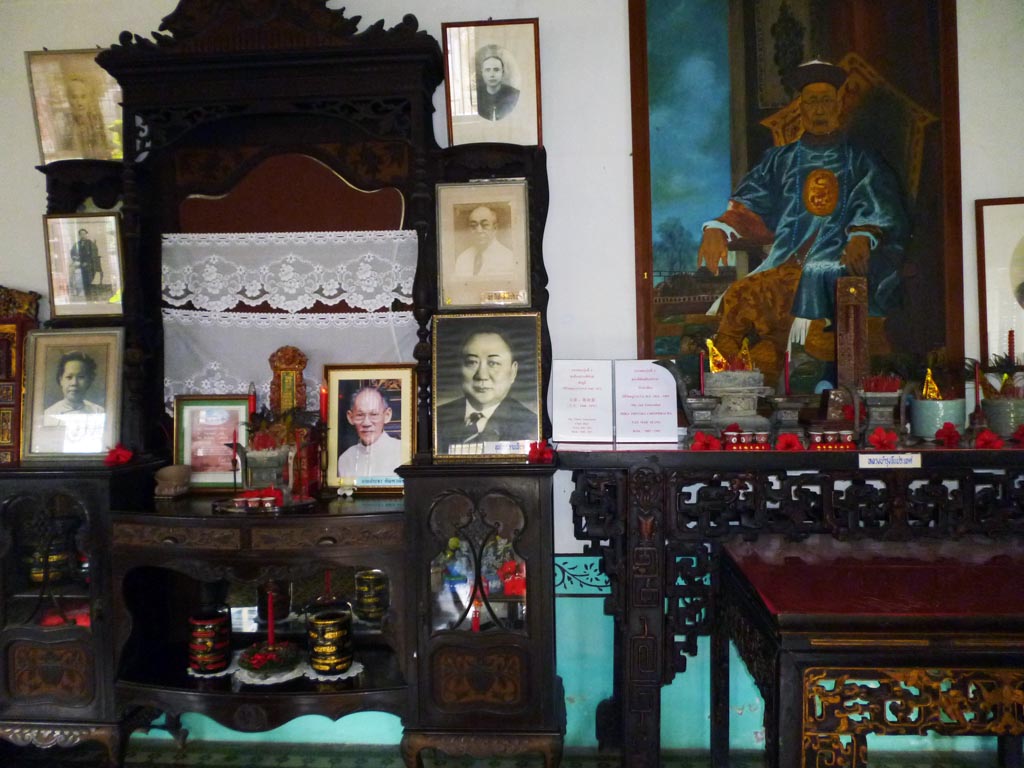 Chinpracha House is a lovely example of living Sino-Portuguese architecture. The house was built in 1903 by Mr Tan Ma Siang (known locally as Prapitak Chinpracha). He was only 20-years old when he commissioned the house. His father had come from China to do business in Phuket's tin mining industry. Since then Chinpracha House has been home to six generations of the Chinpracha family.
The current owner, Khun Daeng, opened the house to the public as a way to share a bit of Phuket's heritage and to raise money to maintain the house. During the day the entire ground floor of the house is open. The upstairs is still her private home.
The house features antique furniture imported from China. The main room has an indoor pond with koi carp and decorated with flowers and vases. Perhaps most charming of all is the wonderful selection of photos depicting the life of six generations of the Chinpracha family. It is a lovely insight into the old Phuket lifestyle.
Chinpracha House is on Krabi Road. There are signs at the entrance way and you can park inside. It is a shame that you can no longer see the house from the road but unfortunately a developer managed to purchase the land on the road front and knocked down the original old wall to build some soulless shop houses. Such is progress. Behind the shophouses, Chinpracha House retains its charm.
Like the Thai Hua Museum above, it may not be the sort of attraction you would go out of your way to see but if you are doing a tour of Phuket Town then it is well worth a visit. Entry is 100-baht for adults and 50-baht for children.
Thavorn Hotel Lobby Museum
The Thavorn Hotel is on Ratsada Road in Phuket Town. It was built in 1961 and was Phuket's first 5-star hotel. It is looking a little worn these days but still has plenty of character.
In the hotel's lobby is a small museum containing artifacts from Phuket's history. There are all sorts of antiques and paraphernalia from the old tin mining days such as mining implements and opium pipes. One of the centerpieces is a glass case containing two sabers, which the two heroines apparently used to fight the Burmese. Perhaps the most fascinating is the collection of old photos. Entrance is 30 baht.
Phuket Seashell Museum
This is a seashell shop with a museum downstairs. The museum is small but contains an impressive array of shells and fossils. Displays include what is claimed to be the world's largest golden pearl (140 carats) and a huge 250kg shell. Entrance is 200 baht for adults and 100 baht for children. Entrance to the shop is of course free and you can buy some nice souvenirs. You might find better prices at some of the smaller seashell shops at the Rawai fish market.
Phuket Sea Shell Museum is on Wiset Road just north of Rawai.
Phuket Philatelic Museum
The post office building in Phuket Town is a nice example of Sino-Portuguese architecture. It is an operational post office but they also have a small philatelic museum. Perhaps this is only going to appeal to committed philatelists but apparently there are many of them out there. The museum is small but includes a bit of postage paraphernalia and of course a good collection of stamps.
They have a souvenir shop where any stamp collectors out there can add vintage Thai stamps to their collection. The post office and museum is on Montree Road in Phuket Town.
Phuket Trick Eye Museum
In late 2012, an interesting new attraction opened in Phuket Town. It is called the Phuket Trick Eye Museum and it is a curious little oddity. We are not sure we really think it is a museum but since that is what they call it, that is where we will put it.
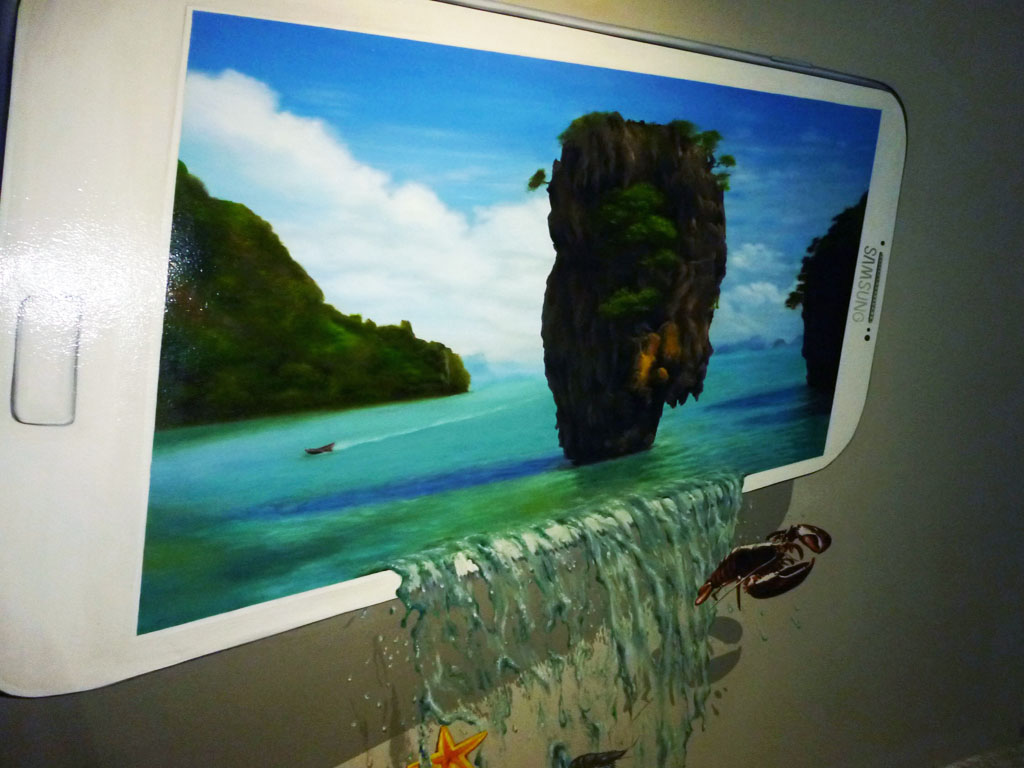 It is a display of optical illusions, although at first glance it is not always clear where the illusion lies. It is only when you place someone next to the picture and take a photo that the illusions really come to life. These are interactive optical illusions. If you stand in the right place in front of the picture and the cameraman stands in the right place to take a picture, then you become part of the scene. Suddenly you are falling into a chasm or Mike Tyson is punching your teeth out.
The spacious rooms have dozens of these images. You wander from image to image trying to work out where the trick is in each one. In fact, they have example photos on boards to show you exactly how you should pose with the picture to make the illusion come to life.
 Some of the illusions work better than others and it is not always clear whether you have captured the illusion until you can check your photos. It is a fun little trip and you can easily pass an hour or two interacting with the many displays. Some may doubt whether it is worth the full 500-baht admission price but this is certainly a nice variation on Phuket's many attractions and is something that could be included in a tour of Phuket Town.
The Phuket Trick Eye Museum is on the corner of Montree Road and Phang Nga Road (in the site of the old Fantasia show). It is open every day of the week from 9:00am to 7:00pm. Entrance is 500-baht for adults and 250-baht for children. There are lower prices of 250-Baht for adults and 150-Baht for children available to Thais and expat residents who can show a Thai driving license or work permit.